


Young Parents Project
The Florida State University (FSU) Young Parents Project is a unique, intensive home visiting program that addresses the complex needs of court-involved young parents and their children. The project uses a multi-disciplinary team of professionals to provide outreach, service coordination, and trauma-informed care. Services to young parents involved in the delinquency system are provided in Miami-Dade and Broward counties, as well as Tallahassee and surrounding rural communities. Funding is also available to serve young families involved with the Miami-Dade County child welfare system. Included in these groups are both male and female youth who have extensive trauma histories.
Staff are persistent in their efforts to build trust, vital to each youth’s progress. Through the parallel process of positive relationships, the intergenerational trajectory of violence, abuse, court involvement, and early parenting begins to change. All services are designed to prevent deeper involvement within court systems while building a healthy relationship with their child.

Clinical Model
The Young Parents Project is adapted from a Yale University evidence-based model that provides intervention within the context of the parent-child relationship and assists the family with health promotion, mental health services, and planning for their future. All services are designed to support the teen’s ability to “hold their baby in mind”, as the relationship between the teen parent and baby becomes the vehicle for change. Supportive services focused on the strengths of everyone are key to supporting the parent/child relationship and a positive, safe transition to adulthood.
YPP staff conduct in-depth intake assessments about each parent and child to identify their needs. The team actively provides trauma-informed service touch points that include regular ongoing home visits and telehealth services, as well as contact with juvenile probation officers, judges, case managers, school and agency personnel, foster parents and others. YPP staff hold weekly team meetings for case discussions, team planning, and reflective supervision.
The adaptation of the model includes referrals received through the court system rather than a public health clinic. This different entry point requires additional goals, to include reduced recidivism and permanency for the young child. The project has been most fortunate over time to receive training, ongoing reflective supervision, and technical support from the authors of Minding the Baby(R) and home visitors who participated in the original research and project design. We are most grateful to Arietta Slade, Ph.D. and Lois Sadler, Ph.D., R.N. for their outstanding work and leadership in the field.
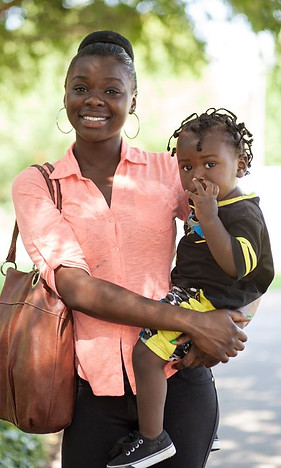
Project Participants
All project participants must be parents with custody or visitation privileges with their child.
Services provided to delinquent youth in 7 Florida counties who:
-
are expectant or parenting ages 12-18
-
are minimum risk and on probation, conditional release, post-commitment probation, participating in a Juvenile Diversion program, or Intake status.
Services provided in partnership with Miami-Dade County child welfare include:
-
expectant or parenting teens and young adults, ages 13 – 21.
-
teen or young adult is involved in child welfare or their baby is in care.
-
referrals by the community based care organization, full case management agencies or the juvenile courts.
Our Services
The young family receives:
-
Regular, ongoing home visits
-
Assistance accessing resources in the community
-
Perinatal education and health promotion
-
Dyadic intervention to promote the parent/child relationship
-
Mental health support and referral for specialized trauma therapy
as indicated -
Support/advocacy during judicial hearings
-
Materials & resources
The team of highly skilled professionals who provide weekly home
visits consists of:
-
Site Coordinator that addresses the family’s concrete needs and
provides court-related advocacy. -
Nurse Educator that focuses on the medical home, health education,
and the development of the teen and baby; and -
Counselor/Infant Mental Health Specialist who provides therapeutic intervention services with a trauma-informed lens.
-
Fatherhood Coordinator provides community outreach services, access to group activities, and resources.
YPP staff recognize the challenges within these families and the unique needs of both male and female youth. Gender-specific services are critical for girls to be respected and valued for their strengths, and to assist boys in their transition to manhood. The program has found that young mothers typically express a deep commitment to making life different for their children, while young fathers often express feeling excluded from their role as a parent and request resources and support to co-parent their child. The unique focus on young fathers as full project participants provides the opportunity to learn from their life experiences and define strategies to address their needs. The program has benefited from additional foundation support in addressing the needs of young fathers. Dr. Clinton Boyd, Jr., Ph.D. serves as the fatherhood consultant with a focus on listening to the voices of young fathers, co-parenting, and quality programming.


Key Elements of this University program:
-
Implement best practices for court-involved expectant and parenting teens within the context of safety, support, and dignity.
-
Provide deeper understanding of the needs of young families, bringing expanded knowledge to the field.
-
Advocate for policy reform that will support improved life trajectories for young mothers, fathers, and their children.
A study focused on rates of recidivism
In the 2021 study by Jennifer Copp and William Casey, FSU College of Criminology and Criminal Justice, they noted that while those enrolled in the Young Parents Project face a higher level of adversity when compared to a group of probationers who were also expectant or parenting at time of DJJ intake, YPP youth do recidivate at a lower rate. While the sample size and the low base rates of recidivism make it difficult to identify statistically significant effects, “the observed differences are both substantively and clinically meaningful.” Additional evaluation will take place over time as the number of participants increases.
For additional information contact Jill Little, Project Director, or Joseph Ward, Project Manager, at email addresses listed below.
Jill Little: jslittle@cpeip.fsu.edu
Joseph Ward: jaw25k@fsu.edu
Young Parents Project Leadership Team
Jill Little, BS, MS - Project Director - jslittle@cpeip.fsu.edu
305-781-4170
Barbara White, MSW, M.Ed. - Research Faculty - bawhite@cpeip.fsu.edu
Valerie Dallas, LCSW, DSW - Reflective Supervision - vdallas@fsu.edu
850-296-5801
Clinton Boyd, Jr., Ph.D. - Fatherhood Consultant - cb23q@fsu.edu
Joseph Ward, BS - Program Manager/Fatherhood Coordinator - jaw25k@fsu.edu
561-397-3594
Tallahassee Home Visiting Team
Hope Jones, RN, BSN, MPH - Nurse Educator/Site Coordinator - hj23d@fsu.edu
850-296-5814
Hollie Hadley, BS, MSW - Counselor/Infant Mental Health Specialist - hwashington@fsu.edu
850-296-5818
Miami Home Visiting Team
Precious Wilcox, BS, MPA - Site Coordinator - pw23e@fsu.edu
786-858-4121
Kimberly Marshall, RN, BSN, IBCLC - Nurse Educator - kdavis6@fsu.edu
305-487-2670
Natalie Joseph, RN, MSN - Nurse Educator - Natalie.Joseph@fsu.edu
305-586-7353
Latasha James-Bodie, MSW, LCSW, IMH-E - Counselor/Infant Mental Health Specialist
lj24@fsu.edu - 305-619-0633
Melinda Williams, MS, RMFT - Counselor/Infant Mental Health Specialist - mnw03g@fsu.edu
305-487-2670
Additional Support Staff
Rebecca Wyatt, LCSW - Data/Evaluation Support Specialist - rjwyatt@fsu.edu
Rosemary Price, MA, RM, RN, Infant Mental Health Specialist - Yale Model Reflective Supervisor
rosie.price624@gmail.com
Beverly Mitchell - Data Entry - bmitchell2@fsu.edu