
What constitutes quality child care?
Research defines 10 essential components that produce meaningful outcomes for the young children they serve. Child care programs that endeavor to improve often begin with tangible changes to physical layouts, equipment, and materials. Because young children learn best in secure relationships, programs must promote nurturing care and strong relationships between children, caregivers, and families. The best programs commit to participating in continuous quality improvement.
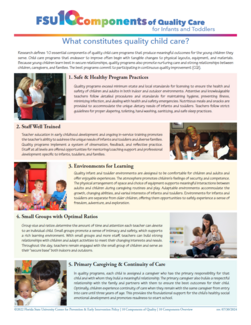
An overview of each of the 10 Components of Quality and what constitutes quality child care.
- Safe & Healthy Program Practices
- Staff Well Trained
- Environments for Learning
- Small Groups with Optimal Ratios
- Primary Caregiving & Continuity Care
- Active & Responsive Caregiving
- Curriculum & Individualization
- Emerging Language & Literacy
- Family Engagement & Cultural Continuity
- Comprehensive Support Services
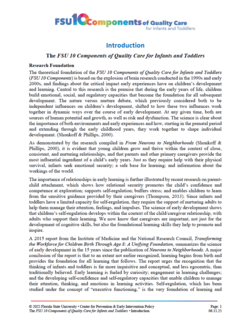
This document includes a description of the research foundation and potential uses of the 10 Components, including a model for continuous quality improvement, and an explanation of the need for system with quality measures for infant/toddler care.
The FSU 10 Components of Quality Tool is a supportive, strengths-based observation instrument for infant/toddler programs.
Available in PDF/Excel formats
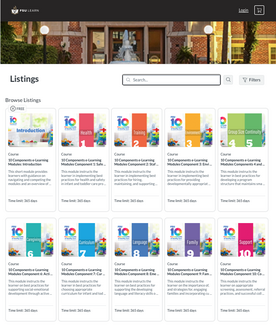
Online, interactive, self-paced e-Learning modules that address best practices in 10 areas for high-quality infant/toddler care.
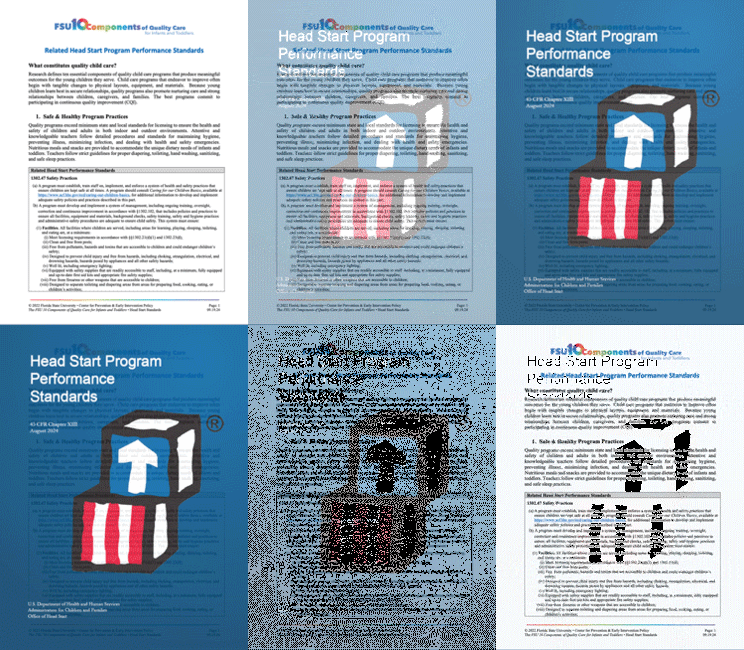
See how each of the 10 Components aligns with the Head Start Program Performance Standards.
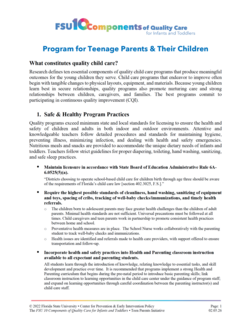
The 10 Components can strengthen the child care initiative in your Teen Parent Program.
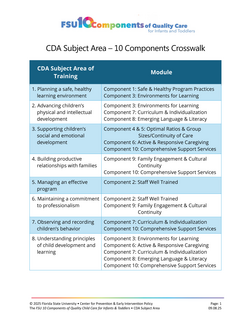
A crosswalk of the FSU 10 Components e-Learning modules with the CDA subject matter areas.
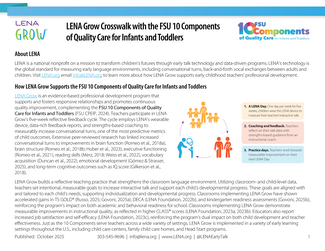
A crosswalk of the FSU 10 Components with the LENA Grow Core Elements.
